Canada Goose
Branta canadensis
Genus ·
Black Geese
Family ·
Ducks, Geese, and Swans
Observation tips
Difficulty: EASY
Best time
🕒 Any
Activity
☀️ Diurnal
Best months
1
2
3
4
5
6
7
8
9
10
11
12
Observation habitat
FarmlandLake wetlandsUrban
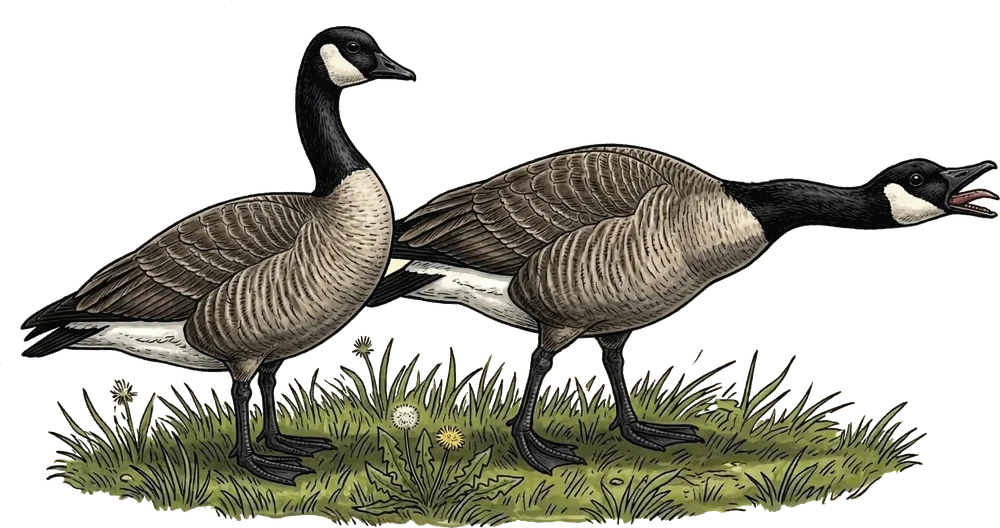
Extremely easy to find in urban parks and on farmland year-round. Look for the iconic white chinstrap.
Stats
Wingspan127–185 cm
Weight2500–6500 g
Length75–110 cm
Lifespan wild10–24 yrs
Size
XS
S
M
L
XL
Nesting
Nest typeScrape
Clutch size4–8 eggs
Incubation25–30 days
Breeding months
1
2
3
4
5
6
7
8
9
10
11
12
Regional Status (Europe)
LC
Least Concern (Europe)
IUCN Red List
MigrationMigratory
Social BehaviourFlocking
Diet: Herbivore
🌾Grain
🌱Grass
🍃Plants
🌻Seeds
Habitat
🚜 Farmland🌿 Grassland🛶 Lake wetlands🏞️ River🏙️ Urban
✦ Fun Fact
Canada Geese often fly in a V-formation to improve flight efficiency. Each bird benefits from aerodynamic upwash created by the wings of the bird in front, reducing energy costs during long-distance migration.

See Canada Goose in the app.
Full encyclopedia, offline diary, AI identification - always with you.
Download on Google Play
Full encyclopedia, offline diary, AI identification - always with you.