Greylag Goose
Anser anser
Genus ·
Grey Geese
Family ·
Ducks, Geese, and Swans
Observation tips
Difficulty: EASY
Best time
🕒 Any
Activity
☀️ Diurnal
Best months
1
2
3
4
5
6
7
8
9
10
11
12
Observation habitat
FarmlandLake wetlands
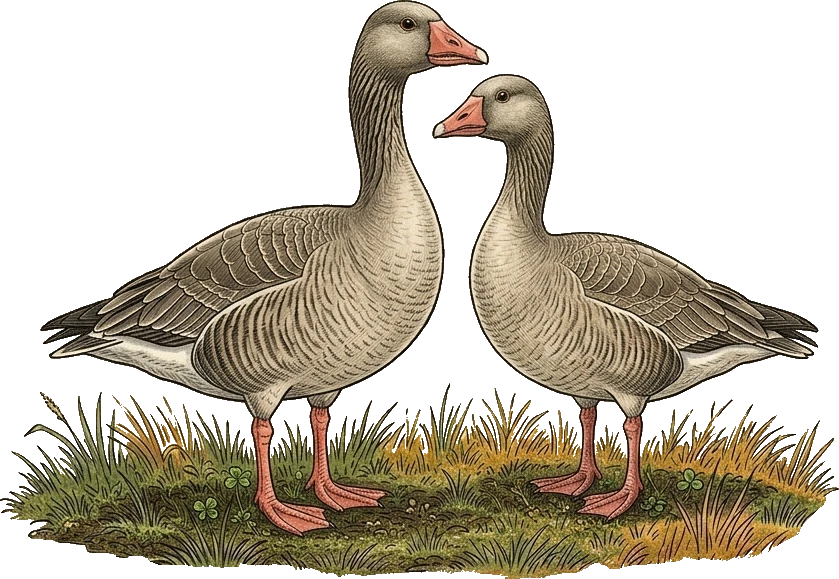
Widespread on park lakes and gravel pits year-round. In flight, look for the very pale, almost white leading edge of the wing.
Stats
Wingspan147–180 cm
Weight2160–4560 g
Length74–91 cm
Lifespan wild10–20 yrs
Size
XS
S
M
L
XL
Nesting
Nest typeScrape
Clutch size4–6 eggs
Incubation27–29 days
Breeding months
1
2
3
4
5
6
7
8
9
10
11
12
Regional Status (Europe)
LC
Least Concern (Europe)
IUCN Red List
MigrationPartial migratory
Social BehaviourFlocking
Diet: Herbivore
🌾Grain
🌱Grass
🍃Plants
Habitat
🚜 Farmland🛶 Lake wetlands🌊 Marine🏞️ River
✦ Fun Fact
The Greylag Goose was the primary subject of Konrad Lorenz's studies on 'imprinting'. He showed that goslings follow the first moving object they see after hatching.

See Greylag Goose in the app.
Full encyclopedia, offline diary, AI identification - always with you.
Download on Google Play
Full encyclopedia, offline diary, AI identification - always with you.