Greater White-fronted Goose
Anser albifrons
Genus ·
Grey Geese
Family ·
Ducks, Geese, and Swans
Observation tips
Difficulty: EASY
Best time
🕒 Any
Activity
☀️ Diurnal
Best months
1
2
3
4
5
6
7
8
9
10
11
12
Observation habitat
FarmlandGrasslandLake wetlands
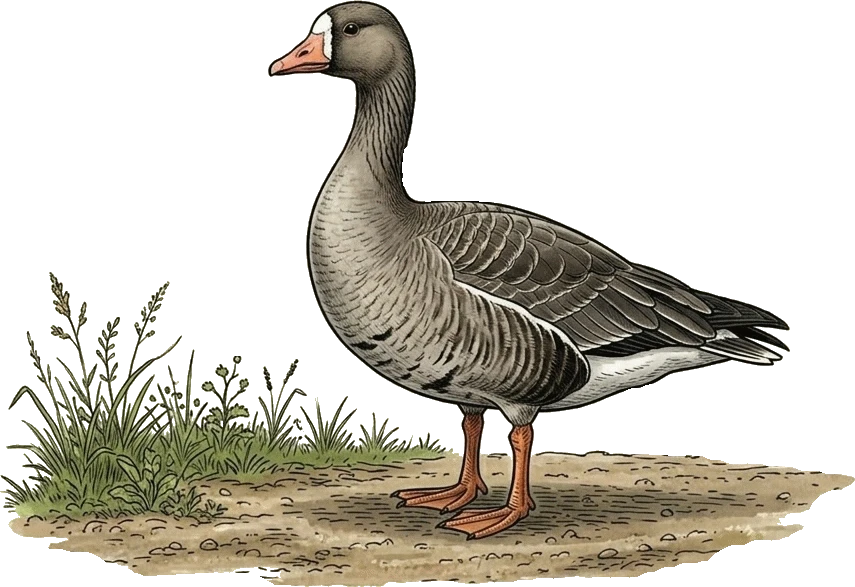
In winter, look for them on flooded grasslands or marshes. Scan the bellies of grey geese for black stripes and look for the white blaze on the face.
Stats
Wingspan130–165 cm
Weight1900–3300 g
Length64–81 cm
Lifespan wild10–20 yrs
Size
XS
S
M
L
XL
Nesting
Nest typeScrape
Clutch size3–7 eggs
Incubation22–28 days
Breeding months
1
2
3
4
5
6
7
8
9
10
11
12
Regional Status (Europe)
LC
Least Concern (Europe)
IUCN Red List
MigrationMigratory
Social BehaviourFlocking
Diet: Herbivore
🌾Grain
🌱Grass
🍃Plants
Habitat
🚜 Farmland🌿 Grassland🛶 Lake wetlands🌊 Marine❄️ Tundra
✦ Fun Fact
The black belly bars on a White-fronted Goose are as unique as a human fingerprint. Researchers use them to identify individual birds without using tags.


See Greater White-fronted Goose in the app.
Full encyclopedia, offline diary, AI identification - always with you.
Download on Google Play
Full encyclopedia, offline diary, AI identification - always with you.