Brant Goose
Branta bernicla
Genus ·
Black Geese
Family ·
Ducks, Geese, and Swans
Observation tips
Difficulty: MODERATE
Best time
🕒 Any
Activity
☀️ Diurnal
Best months
1
2
3
4
5
6
7
8
9
10
11
12
Observation habitat
MarineMarshRiver
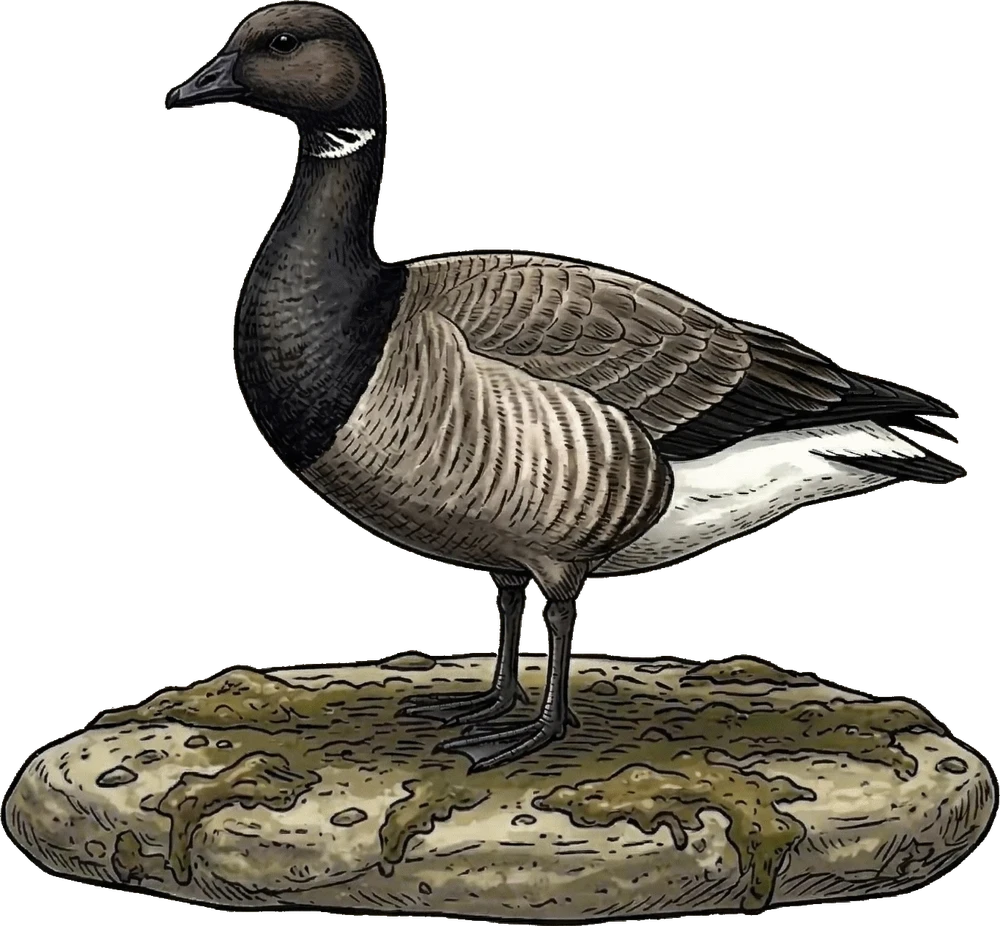
Look for them on coastal mudflats at low tide in winter. They look almost black from a distance when sitting on the water.
Stats
Wingspan105–117 cm
Weight880–2200 g
Length55–62 cm
Lifespan wild10–19 yrs
Size
XS
S
M
L
XL
Nesting
Nest typeScrape
Clutch size3–5 eggs
Incubation22–26 days
Breeding months
1
2
3
4
5
6
7
8
9
10
11
12
Regional Status (Europe)
LC
Least Concern (Europe)
IUCN Red List
MigrationMigratory
Social BehaviourFlocking
Diet: Herbivore
🌱Grass
🍃Plants
Habitat
🌊 Marine🌾 Marsh🏞️ River❄️ Tundra
✦ Fun Fact
In the 1930s, a blight struck eelgrass, and the Brant Goose population crashed. They have since adapted to graze on agricultural fields near the coast.

See Brant Goose in the app.
Full encyclopedia, offline diary, AI identification - always with you.
Download on Google Play
Full encyclopedia, offline diary, AI identification - always with you.