Razorbill
Alca torda
Genus ·
Alca
Family ·
Auks, Murres, and Puffins
Observation tips
Difficulty: MODERATE
Best time
🕒 Any
Activity
☀️ Diurnal
Best months
1
2
3
4
5
6
7
8
9
10
11
12
Observation habitat
MarineMountains
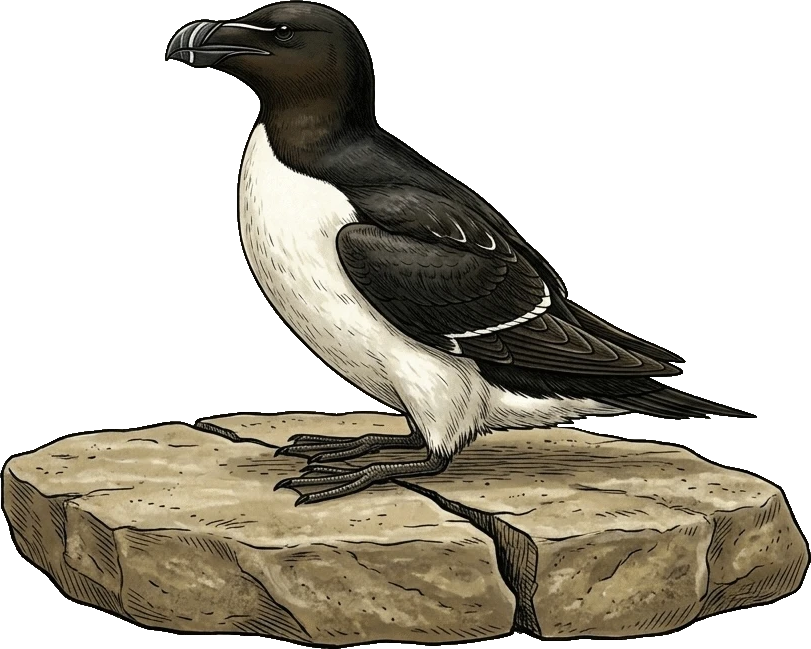
Visit seabird colonies on high cliffs. Look for birds standing upright on ledges. They are easily identified by their heavy, cleaver-shaped bills.
Stats
Wingspan60–69 cm
Weight500–890 g
Length37–39 cm
Lifespan wild10–20 yrs
Size
XS
S
M
L
XL
Nesting
Nest typeCavity
Clutch size1 eggs
Incubation33–39 days
Breeding months
1
2
3
4
5
6
7
8
9
10
11
12
Regional Status (Europe)
NT
Near Threatened (Europe)
IUCN Red List
MigrationPartial migratory
Social BehaviourColonial
Diet: Piscivore
🐟Fish
🦀Crustaceans
Habitat
🌊 Marine⛰️ Mountains
✦ Fun Fact
The Razorbill’s egg is pear-shaped, which helps it stay stable on narrow cliff ledges and reduces the risk of rolling away.

See Razorbill in the app.
Full encyclopedia, offline diary, AI identification - always with you.
Download on Google Play
Full encyclopedia, offline diary, AI identification - always with you.