Mistle Thrush
Turdus viscivorus
Genus ·
Typical Thrushes
Family ·
Thrushes
Observation tips
Difficulty: MODERATE
Best time
🕒 Any
Activity
☀️ Diurnal
Best months
1
2
3
4
5
6
7
8
9
10
11
12
Observation habitat
Berry bearing treesCanopy foliageFarmland
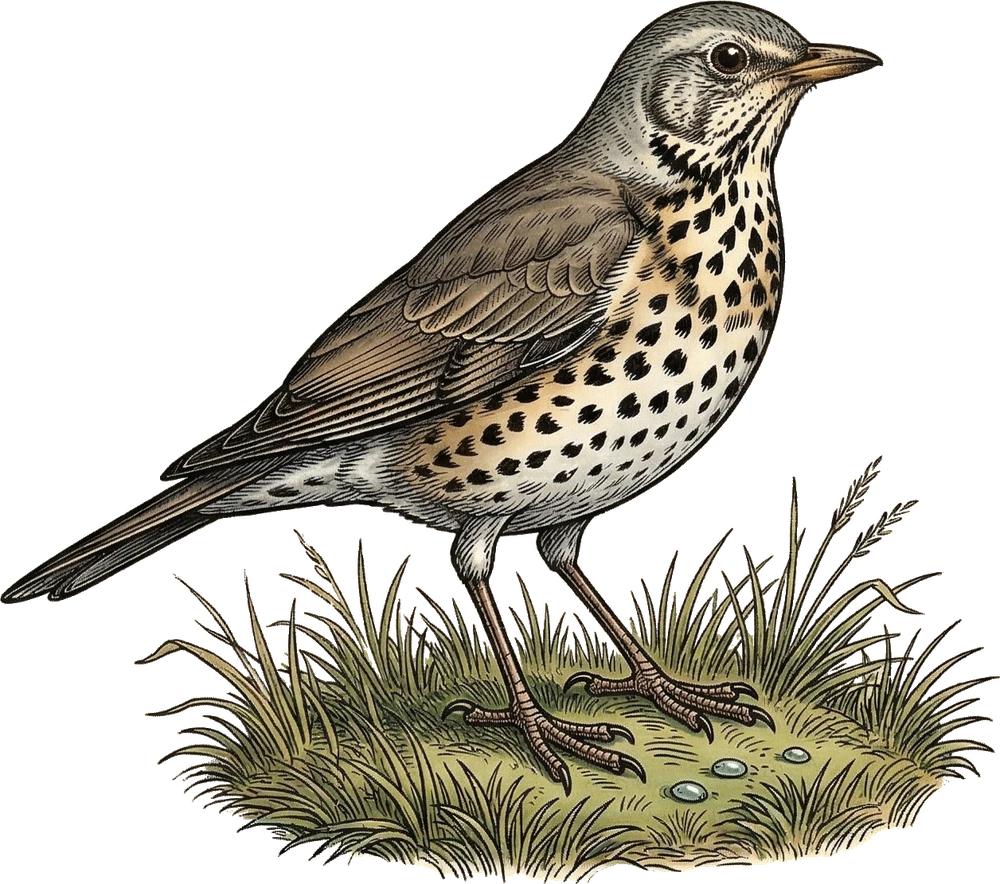
Look for a large, pale thrush with white corners to its tail. Listen for its harsh, rattling alarm call that sounds like a wooden football rattle.
Stats
Wingspan42–48 cm
Weight95–165 g
Length27–29 cm
Lifespan wild3–14 yrs
Size
XS
S
M
L
XL
Nesting
Nest typeCup
Clutch size3–5 eggs
Incubation12–15 days
Breeding months
1
2
3
4
5
6
7
8
9
10
11
12
Regional Status (Europe)
LC
Least Concern (Europe)
IUCN Red List
MigrationPartial migratory
Social BehaviourSolitary
Diet: Omnivore
🫐Berries
🍎Fruits
🦗Insects
🐌Snails
🪱Worms
Habitat
🌲 Forest coniferous🌲🌳 Forest mixed🏡 Garden🍎 Orchard🏙️ Urban
✦ Fun Fact
The Mistle Thrush is one of the earliest songbirds to start singing in late winter, often beginning its territorial song when most other birds are still silent.


See Mistle Thrush in the app.
Full encyclopedia, offline diary, AI identification - always with you.
Download on Google Play
Full encyclopedia, offline diary, AI identification - always with you.