Common Blackbird
Turdus merula
Genus ·
Typical Thrushes
Family ·
Thrushes
Observation tips
Difficulty: EASY
Best time
🕒 Any
Activity
☀️ Diurnal
Best months
1
2
3
4
5
6
7
8
9
10
11
12
Observation habitat
Bird feederBushesForest undergrowthLawns
Look for the male's orange bill. Listen for the slow, lazy fluting song from treetops or chimneys at sunset.
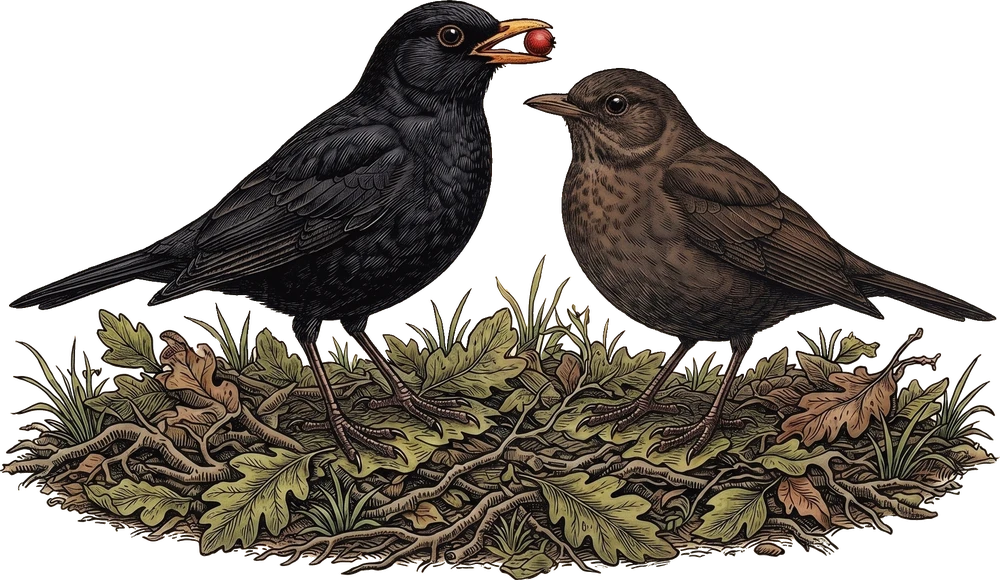
♂ Male · ♀ Female
Stats
Wingspan34–38 cm
Weight80–125 g
Length23–29 cm
Lifespan wild2–16 yrs
Size
XS
S
M
L
XL
Nesting
Nest typeCup
Clutch size3–5 eggs
Incubation12–14 days
Breeding months
1
2
3
4
5
6
7
8
9
10
11
12
Regional Status (Europe)
LC
Least Concern (Europe)
IUCN Red List
MigrationPartial migratory
Social BehaviourMonogamous pairs
Diet: Omnivore
🫐Berries
🍎Fruits
🦗Insects
🐌Snails
🪱Worms
Habitat
🚜 Farmland🌳 Forest deciduous🏡 Garden🏙️ Urban
✦ Fun Fact
Blackbirds use 'listening hunting'. They can detect the tiny vibrations of a moving earthworm beneath the soil surface. Studies show they often perform a 'foot-pattering' behavior to trick worms into moving, making them easier to locate and snatch.


See Common Blackbird in the app.
Full encyclopedia, offline diary, AI identification - always with you.
Download on Google Play
Full encyclopedia, offline diary, AI identification - always with you.