Redwing
Turdus iliacus
Genus ·
Typical Thrushes
Family ·
Thrushes
Observation tips
Difficulty: EASY
Best time
🕒 Any
Activity
☀️ Diurnal
Best months
1
2
3
4
5
6
7
8
9
10
11
12
Observation habitat
Berry bushesFarmlandLeaf litter
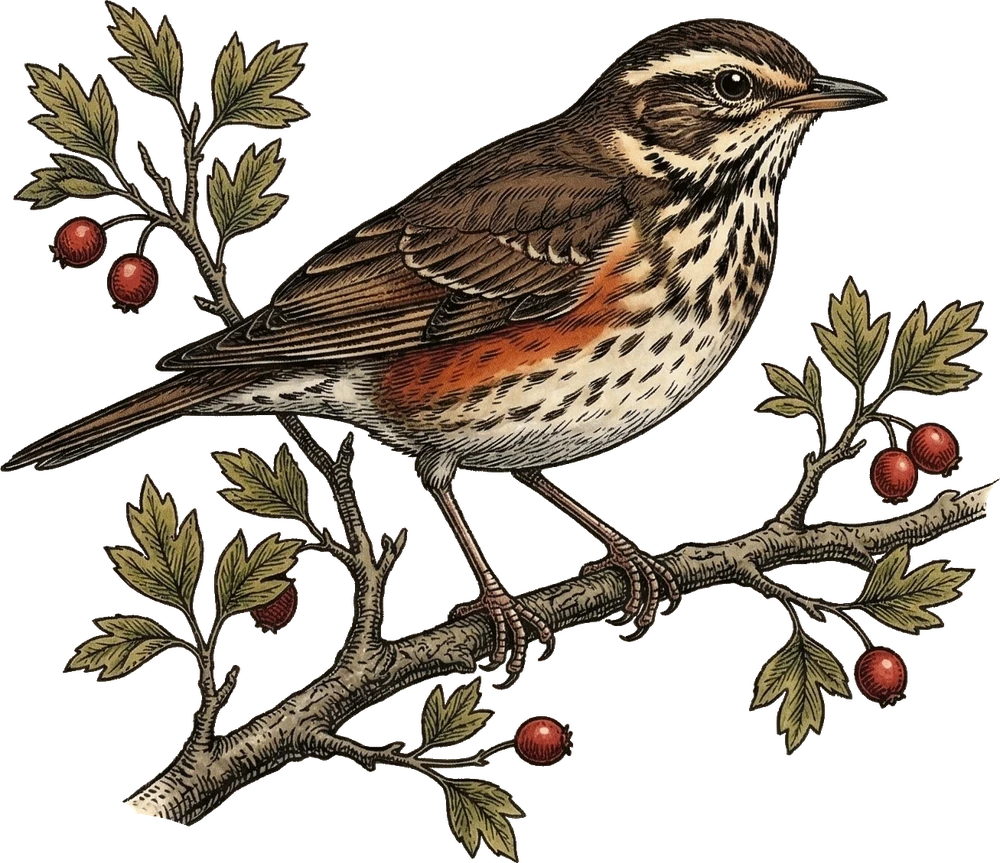
Look for the bright red 'armpits' in flight. On the ground, look for the very strong white eyebrow.
Stats
Wingspan33–35 cm
Weight50–75 g
Length19–23 cm
Lifespan wild2–12 yrs
Size
XS
S
M
L
XL
Nesting
Nest typeCup
Clutch size4–6 eggs
Incubation12–14 days
Breeding months
1
2
3
4
5
6
7
8
9
10
11
12
Regional Status (Europe)
LC
Least Concern (Europe)
IUCN Red List
MigrationMigratory
Social BehaviourFlocking
Diet: Omnivore
🫐Berries
🍎Fruits
🦗Insects
🐌Snails
🪱Worms
Habitat
🌲 Forest coniferous🌳 Forest deciduous🏡 Garden⛰️ Mountains🏙️ Urban
✦ Fun Fact
Redwings were the first birds proven to use ultraviolet vision for foraging. The waxy coating on many berries reflects UV light, making them 'glow' against the foliage and helping the birds spot ripe food from a distance


See Redwing in the app.
Full encyclopedia, offline diary, AI identification - always with you.
Download on Google Play
Full encyclopedia, offline diary, AI identification - always with you.