Black-necked Grebe
Podiceps nigricollis
Genus ·
Typical Grebes
Family ·
Grebes
Observation tips
Difficulty: MODERATE
Best time
🕒 Any
Activity
☀️ Diurnal
Best months
1
2
3
4
5
6
7
8
9
10
11
12
Observation habitat
Open waterReed bedsScrub wasteland
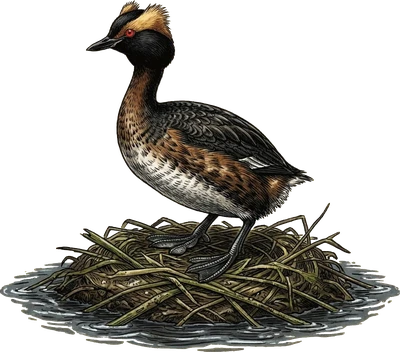
Look for the golden 'ear fans' in summer. In winter, notice the upward tilt of the bill and the dark cap extending below the eye.

Stats
Wingspan56–60 cm
Weight215–450 g
Length28–34 cm
Lifespan wild5–12 yrs
Size
XS
S
M
L
XL
Nesting
Nest typeFloating platform
Clutch size3–5 eggs
Incubation20–22 days
Breeding months
1
2
3
4
5
6
7
8
9
10
11
12
Regional Status (Europe)
LC
Least Concern (Europe)
IUCN Red List
MigrationMigratory
Social BehaviourColonial
Diet: Carnivore
🦀Crustaceans
🐟Fish
🦗Insects
🐚Mollusks
🪶Own feathers
Habitat
🚜 Farmland🛶 Lake wetlands🌊 Marine
✦ Fun Fact
This species is famous for massive moulting concentrations. Tens of thousands gather at salty lakes to moult simultaneously, becoming flightless for several weeks.

See Black-necked Grebe in the app.
Full encyclopedia, offline diary, AI identification - always with you.
Download on Google Play
Full encyclopedia, offline diary, AI identification - always with you.