Willow Warbler
Phylloscopus trochilus
Genus ·
Leaf Warblers
Family ·
Leaf Warblers
Observation tips
Difficulty: MODERATE
Best time
🕒 Any
Activity
☀️ Diurnal
Best months
1
2
3
4
5
6
7
8
9
10
11
12
Observation habitat
Canopy foliageScrub patchesTree branches
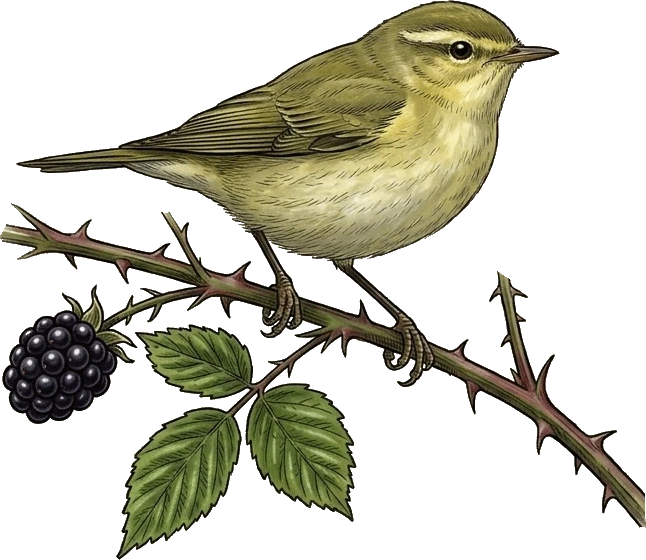
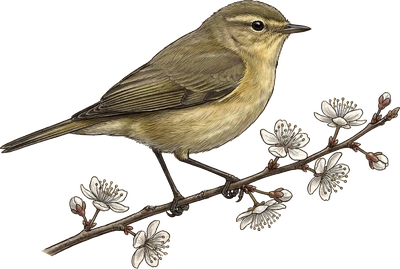
Listen for the soft, descending melody. Visually, look for pale legs and a longer pale eyebrow than the Chiffchaff.
Stats
Wingspan17–22 cm
Weight7–12 g
Length11–12 cm
Lifespan wild2–8 yrs
Size
XS
S
M
L
XL
Nesting
Nest typeDomed nest
Clutch size4–8 eggs
Incubation12–14 days
Breeding months
1
2
3
4
5
6
7
8
9
10
11
12
Regional Status (Europe)
LC
Least Concern (Europe)
IUCN Red List
MigrationMigratory
Social BehaviourSolitary
Diet: Insectivore
🐛Caterpillars
🦗Insects
🕷️Spiders
Habitat
🌳 Forest deciduous🏡 Garden
✦ Fun Fact
Despite weighing only about 10 grams, some Willow Warblers migrate more than 12,000 kilometres between Siberia and Africa each year.
See Willow Warbler in the app.
Full encyclopedia, offline diary, AI identification - always with you.
Download on Google Play
Full encyclopedia, offline diary, AI identification - always with you.