Eurasian Curlew
Numenius arquata
Genus ·
Curlews
Family ·
Sandpipers and Allies
Observation tips
Difficulty: MODERATE
Best time
🕒 Any
Activity
☀️ Diurnal
Best months
1
2
3
4
5
6
7
8
9
10
11
12
Observation habitat
Coastal meadowsMarshy grasslandShorelines
Look for the enormous bill curving downwards. In flight, they show a very prominent white 'V' shape on the lower back.
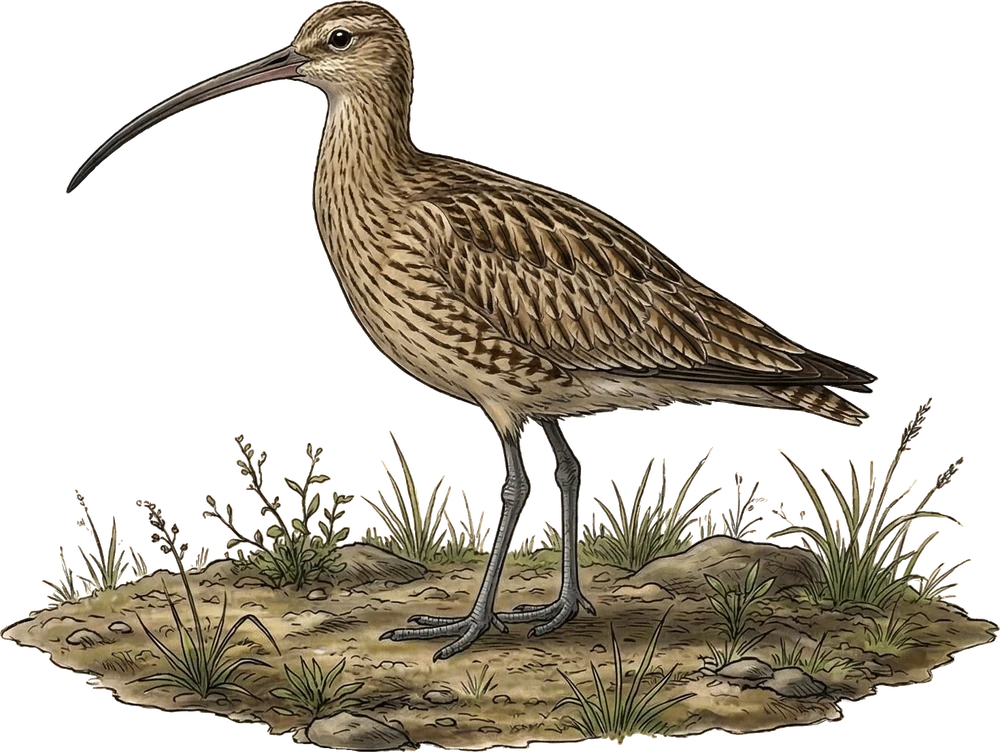
♂ Male · ♀ Female
Stats
Wingspan80–105 cm
Weight450–1300 g
Length50–60 cm
Lifespan wild10–20 yrs
Size
XS
S
M
L
XL
Nesting
Nest typeScrape
Clutch size3–5 eggs
Incubation27–30 days
Breeding months
1
2
3
4
5
6
7
8
9
10
11
12
Regional Status (Europe)
NT
Near Threatened (Europe)
IUCN Red List
MigrationMigratory
Social BehaviourFlocking
Diet: Carnivore
🫐Berries
🦀Crustaceans
🦗Insects
🐚Mollusks
🪱Worms
Habitat
🌿 Grassland🌊 Marine🌾 Marsh🏞️ River
✦ Fun Fact
The female's bill is significantly longer and more curved than the male's. This allows the two sexes to feed at different depths and avoid competing for food.


See Eurasian Curlew in the app.
Full encyclopedia, offline diary, AI identification - always with you.
Download on Google Play
Full encyclopedia, offline diary, AI identification - always with you.