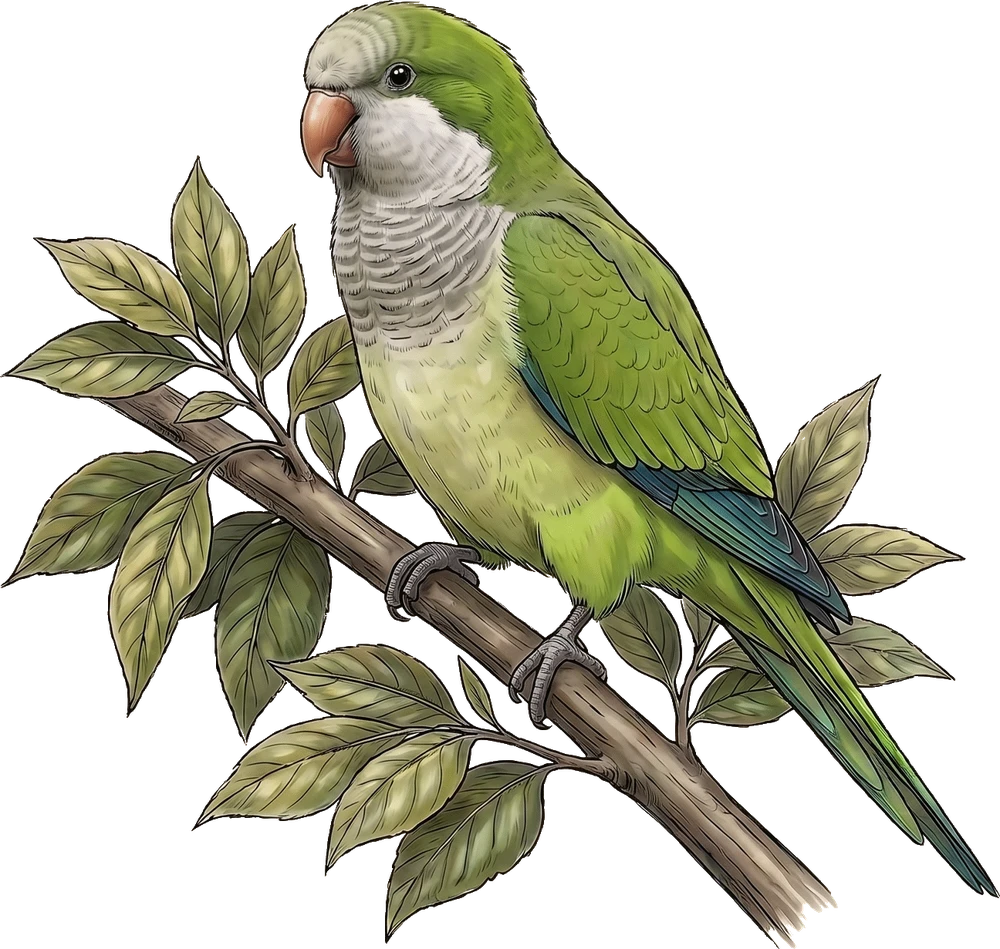
Monk Parakeet
Myiopsitta monachus
Genus ·
Monk and Cliff Parakeets
Family ·
New World and African Parrots
Observation tips
Difficulty: EASY
Best time
🕒 Any
Activity
☀️ Diurnal
Best months
1
2
3
4
5
6
7
8
9
10
11
12
Observation habitat
Bird feederIsolated treesUtility wires
Very easy to find in urban parks in cities like Madrid or Barcelona. Listen for loud, raucous squawking. Look for huge stick nests in palm or pine trees.
Stats
Wingspan45–50 cm
Weight100–120 g
Length28–30 cm
Lifespan wild10–15 yrs
Size
XS
S
M
L
XL
Nesting
Nest typePlatform
Clutch size5–7 eggs
Incubation23–25 days
Breeding months
1
2
3
4
5
6
7
8
9
10
11
12
Regional Status (Europe)
LC
Least Concern (Europe)
IUCN Red List
MigrationResident
Social BehaviourColonial
Diet: Herbivore
🫐Berries
🍎Fruits
🥜Nuts
🍃Plants
🌻Seeds
Habitat
🚜 Farmland🏡 Garden🍎 Orchard🏙️ Urban
✦ Fun Fact
Their communal nests are incredibly heavy. They have been known to cause power outages or even collapse small trees under their weight.

See Monk Parakeet in the app.
Full encyclopedia, offline diary, AI identification - always with you.
Download on Google Play
Full encyclopedia, offline diary, AI identification - always with you.