Eurasian Griffon Vulture
Gyps fulvus
Genus ·
Griffon Vultures
Family ·
Hawks, Eagles, and Kites
Observation tips
Difficulty: MODERATE
Best time
🕒 Any
Activity
☀️ Diurnal
Best months
1
2
3
4
5
6
7
8
9
10
11
12
Observation habitat
FarmlandMountain peaksMountains
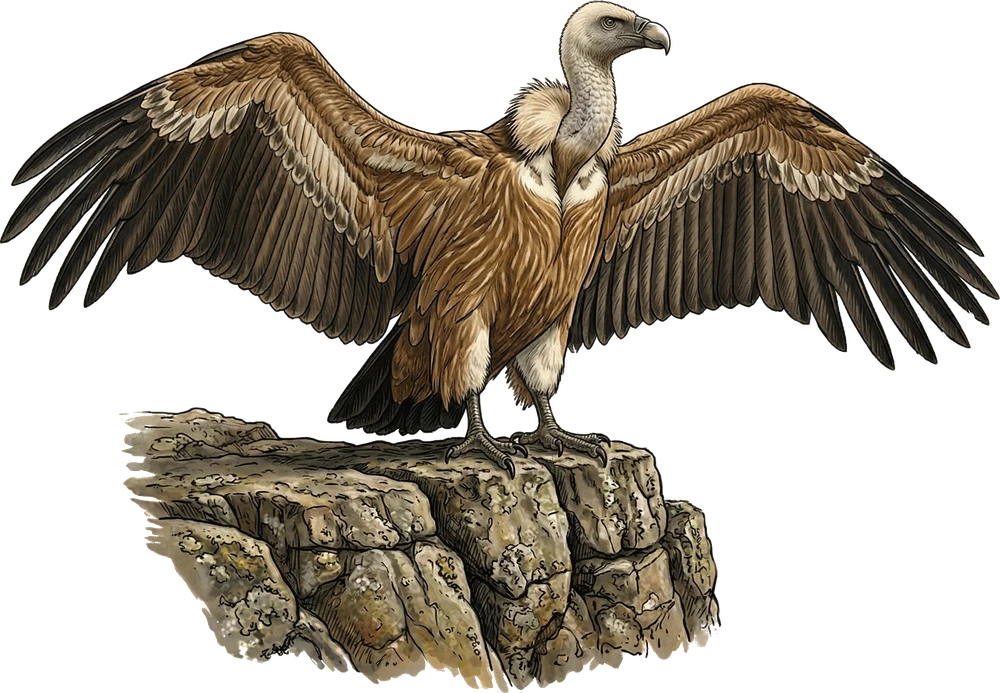
Look for massive, rectangular wings in the sky. Unlike eagles, vultures have very short tails. Their heads are often tucked back into their ruff while soaring.
Stats
Wingspan230–280 cm
Weight6200–11000 g
Length93–122 cm
Lifespan wild20–37 yrs
Size
XS
S
M
L
XL
Nesting
Nest typePlatform
Clutch size1 eggs
Incubation52–55 days
Breeding months
1
2
3
4
5
6
7
8
9
10
11
12
Regional Status (Europe)
LC
Least Concern (Europe)
IUCN Red List
MigrationResident
Social BehaviourColonial
Diet: Scavenger
🦴Carrion
Habitat
🌿 Grassland⛰️ Mountains
✦ Fun Fact
Eurasian Griffon Vultures can travel up to 150 kilometres in a single day searching for food. They do this while barely flapping their wings.

See Eurasian Griffon Vulture in the app.
Full encyclopedia, offline diary, AI identification - always with you.
Download on Google Play
Full encyclopedia, offline diary, AI identification - always with you.