Little Egret
Egretta garzetta
Genus ·
Small Egrets and Herons
Family ·
Herons, Egrets, and Bitterns
Observation tips
Difficulty: EASY
Best time
🕒 Any
Activity
☀️ Diurnal
Best months
1
2
3
4
5
6
7
8
9
10
11
12
Observation habitat
Lake wetlandsMarineRiver
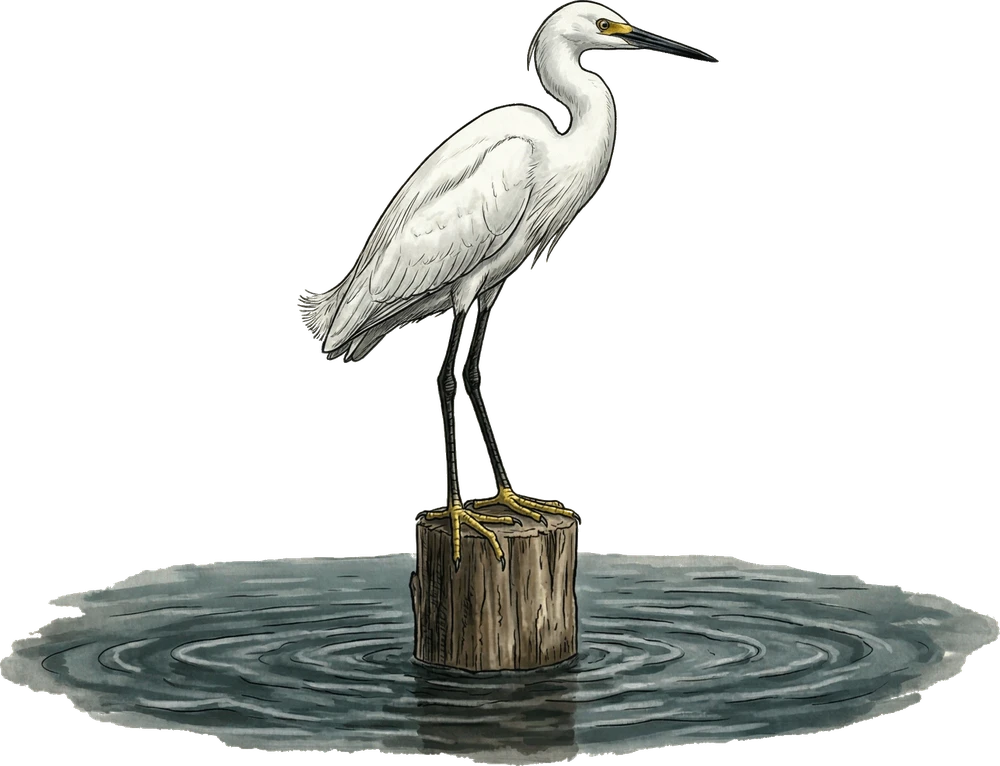
Look for the white heron with black legs and yellow feet. Its bill is much thinner and more dagger-like than that of the Great Egret.
Stats
Wingspan88–105 cm
Weight300–600 g
Length55–65 cm
Lifespan wild5–15 yrs
Size
XS
S
M
L
XL
Nesting
Nest typePlatform
Clutch size3–5 eggs
Incubation21–25 days
Breeding months
1
2
3
4
5
6
7
8
9
10
11
12
Regional Status (Europe)
LC
Least Concern (Europe)
IUCN Red List
MigrationPartial migratory
Social BehaviourColonial
Diet: Piscivore
🐸Amphibians
🦀Crustaceans
🐟Fish
🦗Insects
🐚Mollusks
Habitat
🚜 Farmland🛶 Lake wetlands🌊 Marine🌾 Marsh🏞️ River
✦ Fun Fact
In the 19th century, Little Egret plumes were highly popular in the fashion industry. They were worth twice their weight in gold for decorating hats.
See Little Egret in the app.
Full encyclopedia, offline diary, AI identification - always with you.
Download on Google Play
Full encyclopedia, offline diary, AI identification - always with you.