Mute Swan
Cygnus olor
Genus ·
True Swans
Family ·
Ducks, Geese, and Swans
Observation tips
Difficulty: EASY
Best time
🕒 Any
Activity
☀️ Diurnal
Best months
1
2
3
4
5
6
7
8
9
10
11
12
Observation habitat
Lake wetlandsRiver
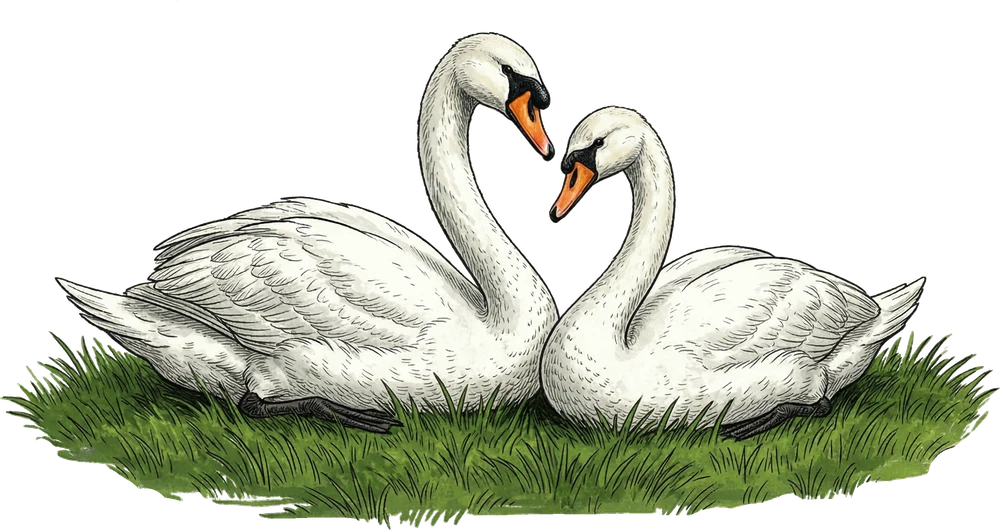
Common year-round. Look for the 'S-shaped' neck and orange bill. Cygnets are grey-brown during their first year.
Stats
Wingspan200–240 cm
Weight6600–15000 g
Length125–170 cm
Lifespan wild10–20 yrs
Size
XS
S
M
L
XL
Nesting
Nest typePlatform
Clutch size5–8 eggs
Incubation35–38 days
Breeding months
1
2
3
4
5
6
7
8
9
10
11
12
Regional Status (Europe)
LC
Least Concern (Europe)
IUCN Red List
MigrationPartial migratory
Social BehaviourTerritorial
Diet: Herbivore
🌾Grain
🌱Grass
🍕Human food
🍃Plants
Habitat
🛶 Lake wetlands🌊 Marine🏞️ River
✦ Fun Fact
In the United Kingdom, the Monarch retains the right of ownership of all unmarked Mute Swans on open water.

See Mute Swan in the app.
Full encyclopedia, offline diary, AI identification - always with you.
Download on Google Play
Full encyclopedia, offline diary, AI identification - always with you.