Eurasian Treecreeper
Certhia familiaris
Genus ·
Typical Treecreepers
Family ·
Treecreepers
Observation tips
Difficulty: MODERATE
Best time
🕒 Any
Activity
☀️ Diurnal
Best months
1
2
3
4
5
6
7
8
9
10
11
12
Observation habitat
Forest coniferousForest mixed
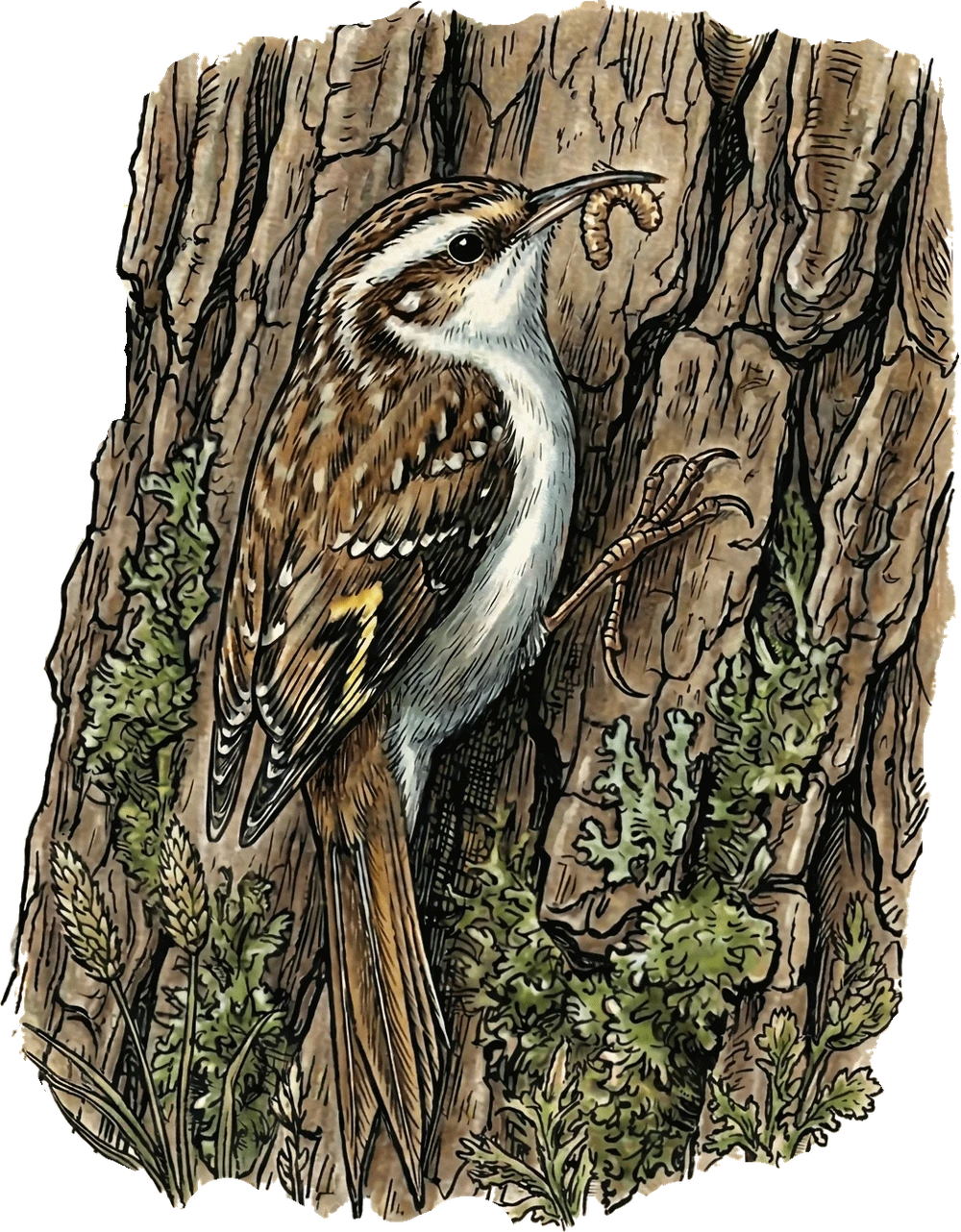
Look for small, jerky movements on pine or spruce trunks. Its thin, high-pitched song is often the easiest way to spot this well-camouflaged bird.
Stats
Wingspan17–21 cm
Weight7–12 g
Length12–13 cm
Lifespan wild2–8 yrs
Size
XS
S
M
L
XL
Nesting
Nest typeCavity
Clutch size5–6 eggs
Incubation13–15 days
Breeding months
1
2
3
4
5
6
7
8
9
10
11
12
Regional Status (Europe)
LC
Least Concern (Europe)
IUCN Red List
MigrationResident
Social BehaviourSolitary
Diet: Insectivore
🦗Insects
🕷️Spiders
🐛Larvae
🥚Eggs
🌻Seeds
Habitat
🌲 Forest coniferous🌲🌳 Forest mixed
✦ Fun Fact
These birds have stiff tail feathers that act as support against tree trunks, helping them stay balanced while they search bark for insects.

See Eurasian Treecreeper in the app.
Full encyclopedia, offline diary, AI identification - always with you.
Download on Google Play
Full encyclopedia, offline diary, AI identification - always with you.