Bohemian Waxwing
Bombycilla garrulus
Genus ·
Waxwings
Family ·
Waxwings
Observation tips
Difficulty: EASY
Best time
🕒 Any
Activity
☀️ Diurnal
Best months
1
2
3
4
5
6
7
8
9
10
11
12
Observation habitat
GardenOrchardUrban
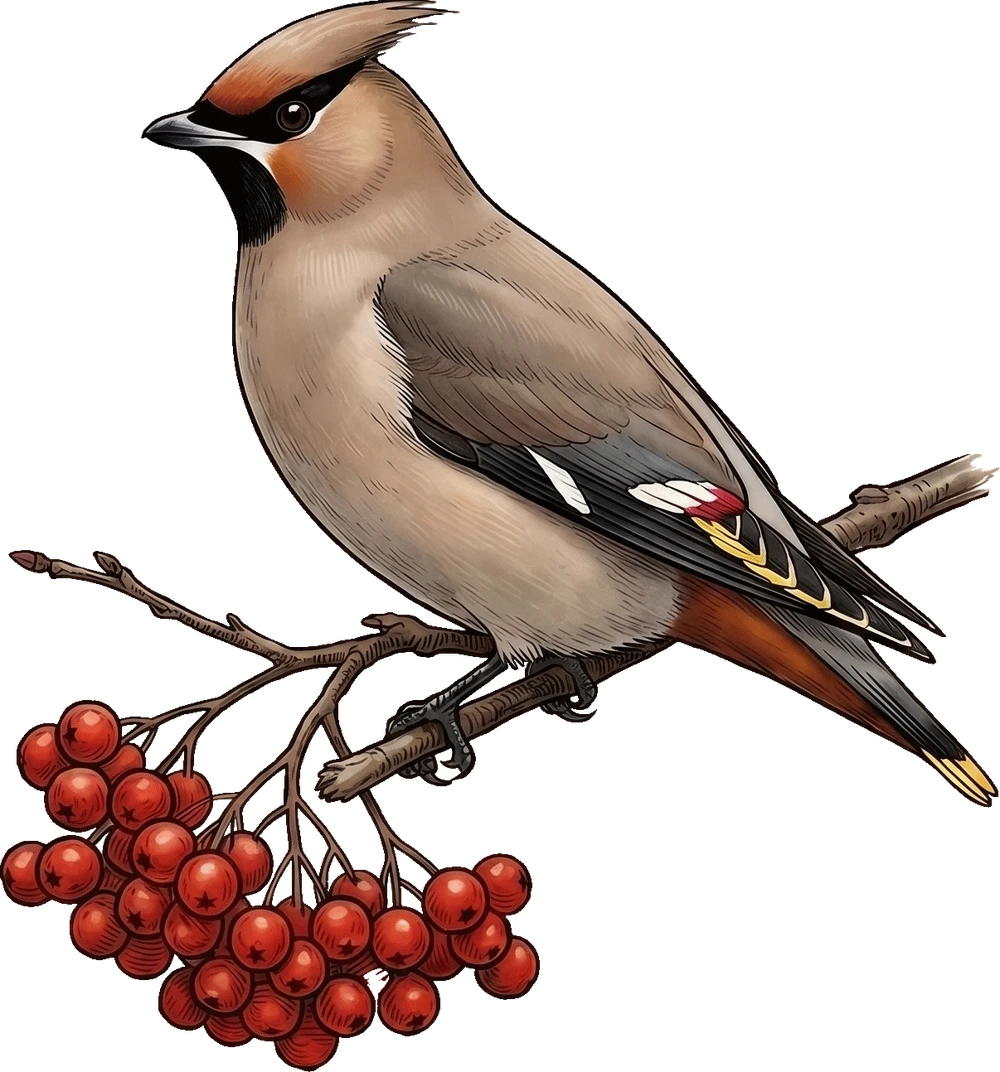
In winter, listen for their trilling 'bell' calls. Look for them on rowan or hawthorn bushes. They often eat fermented berries, which can make them 'drunk'.
Stats
Wingspan32–35 cm
Weight40–70 g
Length18–21 cm
Lifespan wild5–13 yrs
Size
XS
S
M
L
XL
Nesting
Nest typeCup
Clutch size4–6 eggs
Incubation13–15 days
Breeding months
1
2
3
4
5
6
7
8
9
10
11
12
Regional Status (Europe)
LC
Least Concern (Europe)
IUCN Red List
MigrationMigratory
Social BehaviourFlocking
Diet: Omnivore
🫐Berries
🍎Fruits
🦗Insects
🍃Plants
Habitat
🌲 Forest coniferous🍎 Orchard🏙️ Urban
✦ Fun Fact
In late winter, Bohemian Waxwings sometimes eat fermented berries, which can temporarily affect their coordination and make their flight less steady.

See Bohemian Waxwing in the app.
Full encyclopedia, offline diary, AI identification - always with you.
Download on Google Play
Full encyclopedia, offline diary, AI identification - always with you.